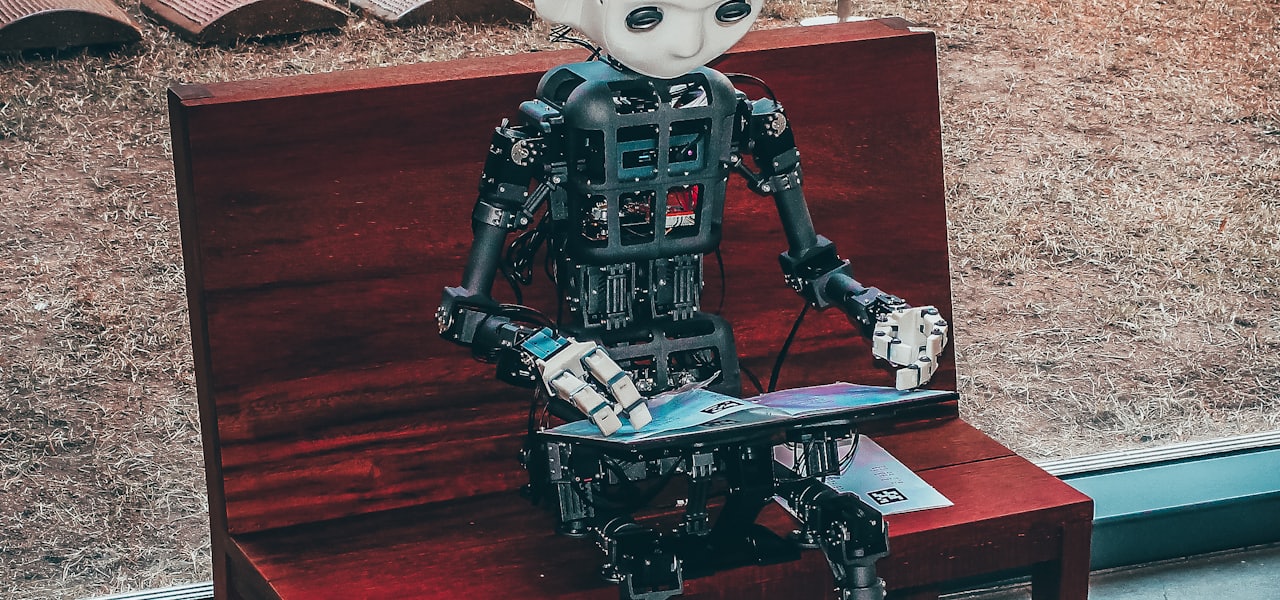
Ideogram is a freemium text-to-image model developed by Ideogram, Inc. using deep learning methodologies to generate digital images from natural language descriptions known as prompts. The model is capable of generating legible text in the images compared to other text-to-image models. == History == Ideogram was founded in 2022 by Mohammad Norouzi, William Chan, Chitwan Saharia, and Jonathan Ho to develop a better text-to-image model. It was first released with its 0.1 model on August 22, 2023, after receiving $16.5 million in seed funding, which itself was led by Andreessen Horowitz and Index Ventures. In February 2024, Ideogram raised $80 million after its 1.0 model release in the same year. In August 2024, Ideogram released its 2.0 model. This model has several styles such as realistic, design, 3D, and anime and better capability in generating text. In February 2025, Ideogram released 2a model. This model was designed for speed and optimized for graphics design and photography generation. In March 2025, Ideogram released its 3.0 model. This model has improved realism and understanding of complex text layout, although like other generative AI models, it still struggles with ambigram creation.
Shape table
Shape tables are a feature of the Apple II ROMs which allows for manipulation of small images encoded as a series of vectors. An image (or shape) can be drawn in the high-resolution graphics mode—with scaling and rotation—via software routines in the ROM. Shape tables are supported via Applesoft BASIC and from machine code in the "Programmer's Aid" package that was bundled with the original Integer BASIC ROMs for that computer. Applesoft's high-resolution graphics routines were not optimized for speed, so shape tables were not typically used for performance-critical software such as games, which were typically written in assembly language and used pre-shifted bitmap shapes. Shape tables were used primarily for static shapes and sometimes for fancy text; Beagle Bros offered a number of fonts in Font Mechanic as Applesoft shape tables. == Technical details == The vectors of a two-dimensional graphic, each encoding a direction from the previous pixel along with a flag indicating whether the new pixel should be illuminated or not, were encoded up to three in a byte. These were stored in a table via the Monitor or the POKE command. From there, the graphic could be referenced by number (a table could contain up to 255 shapes), and built-in Applesoft routines permitted scaling, rotating, and drawing or erasing the shape. An XOR mode was also available to allow the shape to be visible on any color background; this had the advantage, also, of allowing the shape to be easily erased by redrawing it. Apple did not provide any utilities for creating shape tables; they had to be created by hand, usually by plotting on graph paper, then calculating the hexadecimal values and entering them into the computer. Beagle Bros created a shape table editing program, which eliminated the "number crunching", called Apple Mechanic, and a related program, Font Mechanic.
Information security
Information security is the practice of protecting information by mitigating information risks. It is part of information risk management. It typically involves preventing or reducing the probability of unauthorized or inappropriate access to data or the unlawful use, disclosure, disruption, deletion, corruption, modification, inspection, recording, or devaluation of information. It also involves actions intended to reduce the adverse impacts of such incidents. Protected information may take any form, e.g., electronic or physical, tangible (e.g., paperwork), or intangible (e.g., knowledge). Information security's primary focus is the balanced protection of data confidentiality, integrity, and availability (known as the CIA triad, unrelated to the US government organization) while maintaining a focus on efficient policy implementation, all without hampering organization productivity. This is largely achieved through a structured risk management process. To standardize this discipline, academics and professionals collaborate to offer guidance, policies, and industry standards on passwords, antivirus software, firewalls, encryption software, legal liability, security awareness and training, and so forth. This standardization may be further driven by a wide variety of laws and regulations that affect how data is accessed, processed, stored, transferred, and destroyed. While paper-based business operations are still prevalent, requiring their own set of information security practices, enterprise digital initiatives are increasingly being emphasized, with information assurance now typically being dealt with by information technology (IT) security specialists. These specialists apply information security to technology (most often some form of computer system). IT security specialists are almost always found in any major enterprise/establishment due to the nature and value of the data within larger businesses. They are responsible for keeping all of the technology within the company secure from malicious attacks that often attempt to acquire critical private information or gain control of the internal systems. There are many specialist roles in Information Security including securing networks and allied infrastructure, securing applications and databases, security testing, information systems auditing, business continuity planning, electronic record discovery, and digital forensics. == Standards == Information security standards are guidelines generally outlined in published materials that aim to protect a user's or an organization's cyber environment from threats. This environment includes the users themselves, hardware such as devices and networks, software such as applications or services, and any information in storage or transit. These standards comprise security concepts, technologies, and guidelines to deal with an adverse event. They may also include assessment criteria and certification for organizations implementing a minimum level of security. These standards are developed by various international and national bodies to prevent or mitigate cyber-attacks, ensure consistency among developers, and establish a minimum standard in industries susceptible to an attack. The ISO/IEC 27000 family, published by the International Organization for Standardization (ISO) and the International Electrotechnical Commission (IEC), provides information about the guidelines and requirements for an Information Security Management System (ISMS). The Common Criteria (ISO/IEC 15408) provides guidelines on evaluating and certifying the security of a system. The IEC 62443 establishes security standards for automation and control systems. Similarly, the ISO/SAE 21434, ETSI EN 303 645, and EN 18031 provide standards for road vehicles, the Internet of Things, and radio-based systems respectively. The NIST Cybersecurity Framework (NIST CSF) is a set of guidelines developed by the U.S. National Institute of Standards and Technology to help organizations with risk management. NIST also publishes various Federal Information Processing Standards (FIPS) and Special Publications. The United Kingdom has introduced Cyber Essentials, which is a certification scheme to protect organizations against common security threats. The Australian Cyber Security Centre publishes the Essential Eight mitigation strategies. The Payment Card Industry Data Security Standard (PCI DSS) regulates handling of cardholder data in order to reduce credit card fraud. UL has published standards related to specific industries such as UL 2900-2-3 for security and life safety signaling systems and UL-2900-2-1 for healthcare and wellness systems. == Threats == Information security threats come in many different forms. Some of the most common threats today are software attacks, theft of intellectual property, theft of identity, theft of equipment or information, sabotage, and information extortion. Viruses, worms, phishing attacks, and Trojan horses are a few common examples of software attacks. The theft of intellectual property has also been an extensive issue for many businesses. Identity theft is the attempt to act as someone else usually to obtain that person's personal information or to take advantage of their access to vital information through social engineering. Sabotage usually consists of the destruction of an organization's website in an attempt to cause loss of confidence on the part of its customers. Information extortion consists of theft of a company's property or information as an attempt to receive a payment in exchange for returning the information or property back to its owner, as with ransomware. One of the most functional precautions against these attacks is to conduct periodical user awareness. Governments, military, corporations, financial institutions, hospitals, non-profit organizations, and private businesses amass a great deal of confidential information about their employees, customers, products, research, and financial status. Should confidential information about a business's customers or finances or new product line fall into the hands of a competitor or hacker, a business and its customers could suffer widespread, irreparable financial loss, as well as damage to the company's reputation. From a business perspective, information security must be balanced against cost; the Gordon-Loeb Model provides a mathematical economic approach for addressing this concern. For the individual, information security has a significant effect on privacy, which is viewed very differently in various cultures. == History == Since the early days of communication, diplomats and military commanders understood that it was necessary to provide some mechanism to protect the confidentiality of correspondence and to have some means of detecting tampering. Julius Caesar is credited with the invention of the Caesar cipher c. 50 B.C., which was created in order to prevent his secret messages from being read should a message fall into the wrong hands. However, for the most part protection was achieved through the application of procedural handling controls. Sensitive information was marked up to indicate that it should be protected and transported by trusted persons, guarded and stored in a secure environment or strong box. As postal services expanded, governments created official organizations to intercept, decipher, read, and reseal letters (e.g., the U.K.'s Secret Office, founded in 1653). In the mid-nineteenth century more complex classification systems were developed to allow governments to manage their information according to the degree of sensitivity. For example, the British Government codified this, to some extent, with the publication of the Official Secrets Act in 1889. Section 1 of the law concerned espionage and unlawful disclosures of information, while Section 2 dealt with breaches of official trust. A public interest defense was soon added to defend disclosures in the interest of the state. A similar law was passed in India in 1889, The Indian Official Secrets Act, which was associated with the British colonial era and used to crack down on newspapers that opposed the Raj's policies. A newer version was passed in 1923 that extended to all matters of confidential or secret information for governance. By the time of the First World War, multi-tier classification systems were used to communicate information to and from various fronts, which encouraged greater use of code making and breaking sections in diplomatic and military headquarters. Encoding became more sophisticated between the wars as machines were employed to scramble and unscramble information. The establishment of computer security inaugurated the history of information security. The need for such appeared during World War II. The volume of information shared by the Allied countries during the Second World War necessitated formal alignment of classification systems and procedural controls. An arcane range of markings evol
SPKAC
SPKAC (Signed Public Key and Challenge, also known as Netscape SPKI) is a format for sending a certificate signing request (CSR): it encodes a public key, that can be manipulated using OpenSSL. It is created using the little documented HTML keygen element inside a number of Netscape compatible browsers. == Standardisation == There exists an ongoing effort to standardise SPKAC through an Internet Draft in the Internet Engineering Task Force (IETF). The purpose of this work has been to formally define what has existed prior as a de facto standard, and to address security deficiencies, particular with respect to historic insecure use of MD5 that has since been declared unsafe for use with digital signatures. == Implementations == HTML5 originally specified the
WhoSay
WhoSay was an American social media service and branding platform for celebrities and their fans. Founded in Los Angeles in 2010, with financing by Creative Artists Agency (CAA), Amazon.com and other investors, it is notable for allowing its users to retain ownership rights over the content that they post to their accounts, through copyright branding, and for enabling users to post content to other social media sites like Twitter, Facebook, Instagram and Tumblr simultaneously. WhoSay describes itself as a "social celebrity magazine" whose editorial team keeps its users informed about the latest celebrity and entertainment news. Clients such as Dylan McDermott and Chris Rock lauded the service for its ability to add content to multiple social network sites easily. Rock in particular has commented on its ease of use for those who are not part of a tech-savvy demographic, commenting, "It's perfect for someone that's not 25." WhoSay's competitors included theAudience, which is operated by the William Morris Endeavor. == History == WhoSay was founded in March 2010, by Steve Ellis and the Los Angeles-based talent agency Creative Artists Agency (CAA). It was financed through investments Amazon.com (who along with CAA, holds a minority stake in the company), Comcast, Greylock Partners, and High Peak Ventures. The company's main headquarters are in The New York Times Building in Manhattan, with additional headquarters in CAA's office building in the Silicon Beach area of Los Angeles, and in London. The company was founded to protect celebrities' intellectual property and enable the celebrities themselves to profit themselves from their own content through copyright branding. Its chief executive is co-founder Steve Ellis, who, after leaving Getty Images, was contacted by CAA, who were looking to resolve the issue of celebrities losing the rights to their own photos and videos when uploading them to social network sites. Ellis explained WhoSay's mission thus: "We work with people who are constantly being utilized by third parties for the wrong reasons. [The company was formed] to give celebrities and other influential people a set of tools to allow them to manage and control their presence in the digital world." In this way, WhoSay is likened by Ellis to "a People magazine by the people themselves who are in it." The company started slowly, until CAA client Tom Hanks signed onto WhoSay three months after the service's launch. The company continued to maintain a low profile for the first three years of operation, during which it accumulated a client list of 1,500 actors, musicians and artists. Clients are accepted by the service on an invitation-only basis, although they are not restricted to Creative Artists clients. Among them are Kelly Clarkson, Julia Louis-Dreyfus, Paula Patton, Kevin Spacey, Jim Carrey, John Cusack, Bill Maher, Johnny Knoxville, Chelsea Handler, Eva Longoria, Spike Lee, Enrique Iglesias and Katie Couric. Clients are not charged for the service, and are given a share of any revenue that is generated by advertisements. They are also given the ability share in the database of e-mail addresses that come with registration, in order to communicate directly with fans. Actor Dylan McDermott was introduced to WhoSay by his agent, as a way of easily posting content to Facebook, Twitter, Tumblr and even China's Tencent social network with relative ease. McDermott comments, "When you put something out there, you can hit everything at one time. It makes it easy for me." Comedian Chris Rock has commented that WhoSay is ideal for people like him have developed difficulty in keeping track of different websites as they get older, saying, "It's perfect for someone that's not 25." In September 2013 WhoSay introduced a mobile application for consumers. By October 2013, the company's website attracted 12 million monthly visitors. In July 2014 Rob Gregory left his role as president of Newsweek's The Daily Beast to become WhoSay's chief revenue officer. Among his responsibilities are developing ways to monetize WhoSay's web and mobile products, such as premium advertising strategies and brand partnerships. WhoSay does not allow consumers to create accounts, nor does it include search features, making it difficult to access a celebrity's account unless a user is directed there from one of their other social pages. According to Ellis, consumers have enough social media choices, saying, "Frankly they don't really need the services that we provide, and there are a lot of very specific features built into our service that really only benefit someone who is of a high profile." By February 2015, WhoSay had amassed 4.8 million unique users, and expanded its accounts to companies that employ celebrities for branded content. Such companies include Lexus, which partnered with the company to promote a campaign in which actress Rosario Dawson, during the lead up to the 87th Academy Awards, released five short videos on her social media accounts. The videos feature her driving through Los Angeles in preparation for the grand opening of her pop-up store, which sells Studio One Eighty Nine, a clothing line tied to her foundation promoting African culture and content. That April, WhoSay partnered with Chevrolet's #BestDayEver social media campaign for April Fool's Day, enlisting Olivia Wilde, Norman Reedus, Alec Baldwin, Ian Somerhalder, and Nikki Reed to surprise students in four U.S. classrooms as their substitute teachers. For example, Baldwin, dressed as Abraham Lincoln, surprised students in an Occidental College class on U.S. Culture and Society. Other companies that WhoSay has partnered with include KFC, JCPenney, Dunkin' Donuts and Crest. In January 2018, the website was acquired by Viacom (now Paramount Global).
Phrase structure grammar
The term phrase structure grammar was originally introduced by Noam Chomsky as the term for grammar studied previously by Emil Post and Axel Thue (Post canonical systems). Some authors, however, reserve the term for more restricted grammars in the Chomsky hierarchy: context-sensitive grammars or context-free grammars. In a broader sense, phrase structure grammars are also known as constituency grammars. The defining character of phrase structure grammars is thus their adherence to the constituency relation, as opposed to the dependency relation of dependency grammars. == History == In 1956, Chomsky wrote, "A phrase-structure grammar is defined by a finite vocabulary (alphabet) Vp, and a finite set Σ of initial strings in Vp, and a finite set F of rules of the form: X → Y, where X and Y are strings in Vp." == Constituency relation == In linguistics, phrase structure grammars are all those grammars that are based on the constituency relation, as opposed to the dependency relation associated with dependency grammars; hence, phrase structure grammars are also known as constituency grammars. Any of several related theories for the parsing of natural language qualify as constituency grammars, and most of them have been developed from Chomsky's work, including Government and binding theory Generalized phrase structure grammar Head-driven phrase structure grammar Lexical functional grammar The minimalist program Nanosyntax Further grammar frameworks and formalisms also qualify as constituency-based, although they may not think of themselves as having spawned from Chomsky's work, e.g. Arc pair grammar, and Categorial grammar.
Social network hosting service
A social network hosting service is a web hosting service that specifically hosts the user creation of web-based social networking services, alongside related applications. Such services are also known as vertical social networks due to the creation of SNSes which cater to specific user interests and niches; like larger, interest-agnostic SNSes, such niche networking services may also possess the ability to create increasingly niche groups of users. == List of social network hosting services == Federated Media Publishing's BigTent BroadVision Clearvale Ning Wall.fm